
String of Buttons (Crassula perforata)
String of Buttons (Crassula perforata) - Large
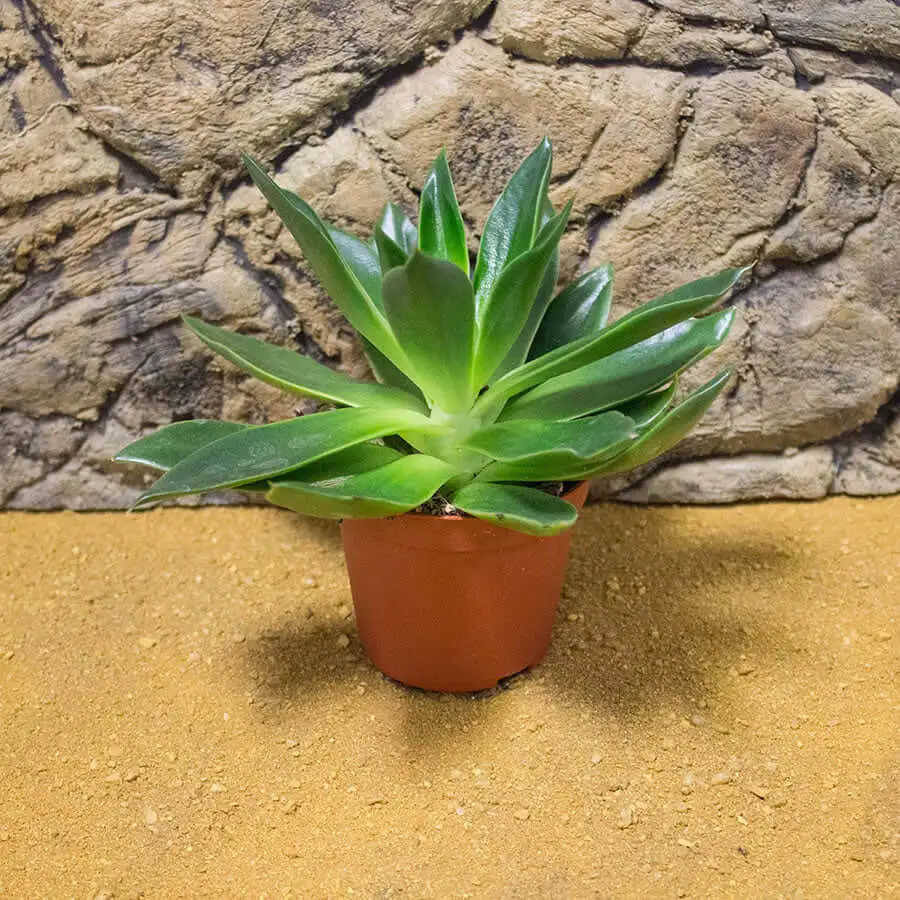
If you're a beginner or tend to forget to water your plants, consider growing String of Buttons (Crassula perforata). This succulent has square or triangle-shaped leaves that form a spiral around its stem, giving it a stacked appearance. The grey-green leaves can turn pink when exposed to enough light. Plant this fast-growing succulent indoors or outdoors during the spring and summer. Keep in mind that Crassula perforata is toxic to both humans and animals.
This plant, String of Buttons, is ideal for surviving in low-light, dry conditions and varying temperatures, making it resilient against the neglect often experienced by inexperienced plant owners.
This drought-resistant succulent is indigenous to the harsh, arid terrain and rocky inclines of South Africa, allowing it to thrive among the rugged plant life. Its resilience has enabled it to thrive in a variety of environments.
Easy maintenance and adaptability: String of Buttons thrives indoors and in some warmer North American zones, making it perfect for container or terrarium gardening. Enjoy this hardy and versatile plant with minimal effort.
Proper drainage is essential for the survival of this versatile plant. The primary cause of death for this plant is overwatering.
String of Buttons (Crassula perforata) - Large
If you're a beginner or tend to forget to water your plants, consider growing String of Buttons (Crassula perforata). This succulent has square or triangle-shaped leaves that form a spiral around its stem, giving it a stacked appearance. The grey-green leaves can turn pink when exposed to enough light. Plant this fast-growing succulent indoors or outdoors during the spring and summer. Keep in mind that Crassula perforata is toxic to both humans and animals.
This plant, String of Buttons, is ideal for surviving in low-light, dry conditions and varying temperatures, making it resilient against the neglect often experienced by inexperienced plant owners.
This drought-resistant succulent is indigenous to the harsh, arid terrain and rocky inclines of South Africa, allowing it to thrive among the rugged plant life. Its resilience has enabled it to thrive in a variety of environments.
Easy maintenance and adaptability: String of Buttons thrives indoors and in some warmer North American zones, making it perfect for container or terrarium gardening. Enjoy this hardy and versatile plant with minimal effort.
Proper drainage is essential for the survival of this versatile plant. The primary cause of death for this plant is overwatering.
Original: $10.13
-70%$10.13
$3.04Description
String of Buttons (Crassula perforata) - Large
If you're a beginner or tend to forget to water your plants, consider growing String of Buttons (Crassula perforata). This succulent has square or triangle-shaped leaves that form a spiral around its stem, giving it a stacked appearance. The grey-green leaves can turn pink when exposed to enough light. Plant this fast-growing succulent indoors or outdoors during the spring and summer. Keep in mind that Crassula perforata is toxic to both humans and animals.
This plant, String of Buttons, is ideal for surviving in low-light, dry conditions and varying temperatures, making it resilient against the neglect often experienced by inexperienced plant owners.
This drought-resistant succulent is indigenous to the harsh, arid terrain and rocky inclines of South Africa, allowing it to thrive among the rugged plant life. Its resilience has enabled it to thrive in a variety of environments.
Easy maintenance and adaptability: String of Buttons thrives indoors and in some warmer North American zones, making it perfect for container or terrarium gardening. Enjoy this hardy and versatile plant with minimal effort.
Proper drainage is essential for the survival of this versatile plant. The primary cause of death for this plant is overwatering.