
Prickly Pear (Opuntia tuna)
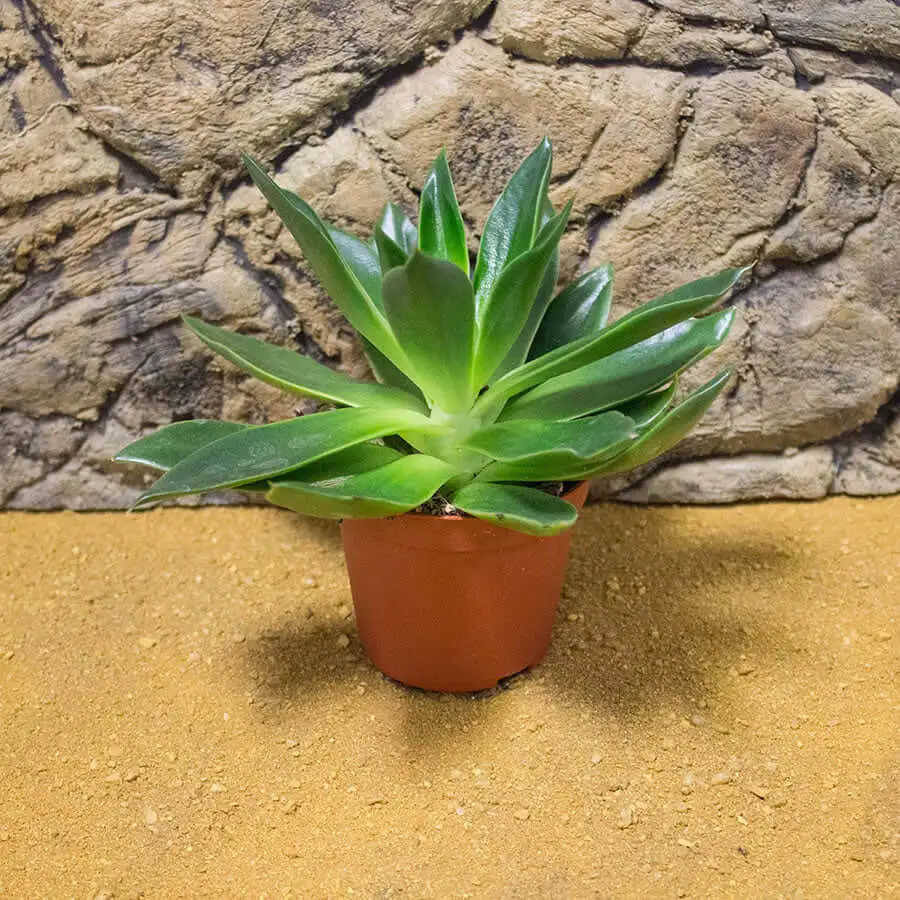
This cactus will eventually grow very large, but when small can be used in a dry terrarium. Must have good light and a free draining soil. Water occasionally as the soil dries out but try to avoid letting the pads start to shrivel. Tortoises love opuntia and it is a great food for them. Grown in a large pot you can harvest pads for feeding without killing the plant.
Different species of Opuntia exhibit varying growth patterns, ranging from low, wide shrubs to tall, treelike plants that can reach up to 5m in height. These plants' segments, known as cladodes, are flat and paddle-shaped, typically found in shades of green but occasionally in green-blue or purple. The cladodes are covered in small, hair-like spines called glochids, which detach from the plant when touched. Some species may also possess larger, more robust spines. Depending on the species, the flowers can be yellow, pink, orange, or white. The fruit, also known as prickly pears or "tunas," are fleshy red berries with small spines covering their surface.
This cactus will eventually grow very large, but when small can be used in a dry terrarium. Must have good light and a free draining soil. Water occasionally as the soil dries out but try to avoid letting the pads start to shrivel. Tortoises love opuntia and it is a great food for them. Grown in a large pot you can harvest pads for feeding without killing the plant.
Different species of Opuntia exhibit varying growth patterns, ranging from low, wide shrubs to tall, treelike plants that can reach up to 5m in height. These plants' segments, known as cladodes, are flat and paddle-shaped, typically found in shades of green but occasionally in green-blue or purple. The cladodes are covered in small, hair-like spines called glochids, which detach from the plant when touched. Some species may also possess larger, more robust spines. Depending on the species, the flowers can be yellow, pink, orange, or white. The fruit, also known as prickly pears or "tunas," are fleshy red berries with small spines covering their surface.
Original: $6.39
-70%$6.39
$1.92Description
This cactus will eventually grow very large, but when small can be used in a dry terrarium. Must have good light and a free draining soil. Water occasionally as the soil dries out but try to avoid letting the pads start to shrivel. Tortoises love opuntia and it is a great food for them. Grown in a large pot you can harvest pads for feeding without killing the plant.
Different species of Opuntia exhibit varying growth patterns, ranging from low, wide shrubs to tall, treelike plants that can reach up to 5m in height. These plants' segments, known as cladodes, are flat and paddle-shaped, typically found in shades of green but occasionally in green-blue or purple. The cladodes are covered in small, hair-like spines called glochids, which detach from the plant when touched. Some species may also possess larger, more robust spines. Depending on the species, the flowers can be yellow, pink, orange, or white. The fruit, also known as prickly pears or "tunas," are fleshy red berries with small spines covering their surface.